Curioocity Logo

The Economics of Slow Travel

Slower Travel Creates Higher Economic Value

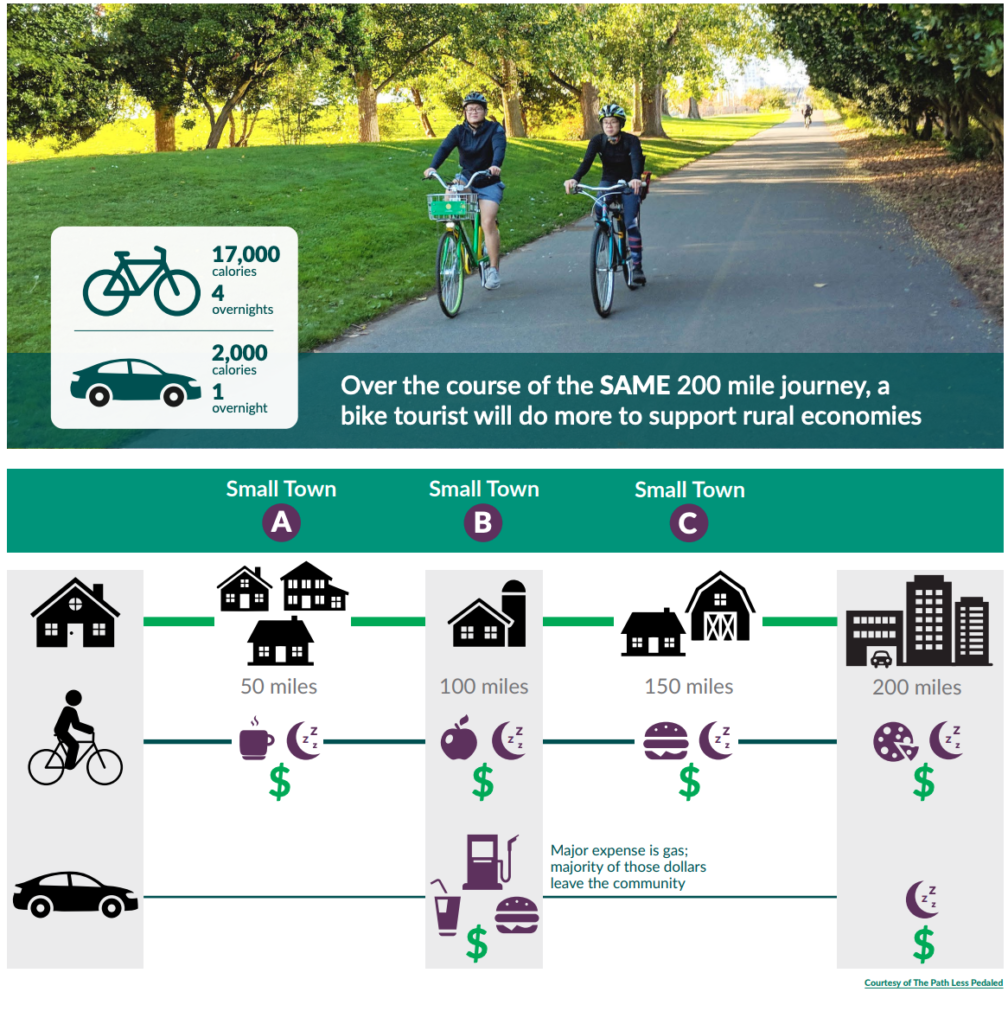
Travelers powered by pedal and foot are interested in experiencing the distinctive characteristics of a place, making meaningful connections, and exploring off the beaten path. They tend to explore beyond core attractions, stop more frequently, stay longer, and spend more on local services.
Data Supporting Slow Travel

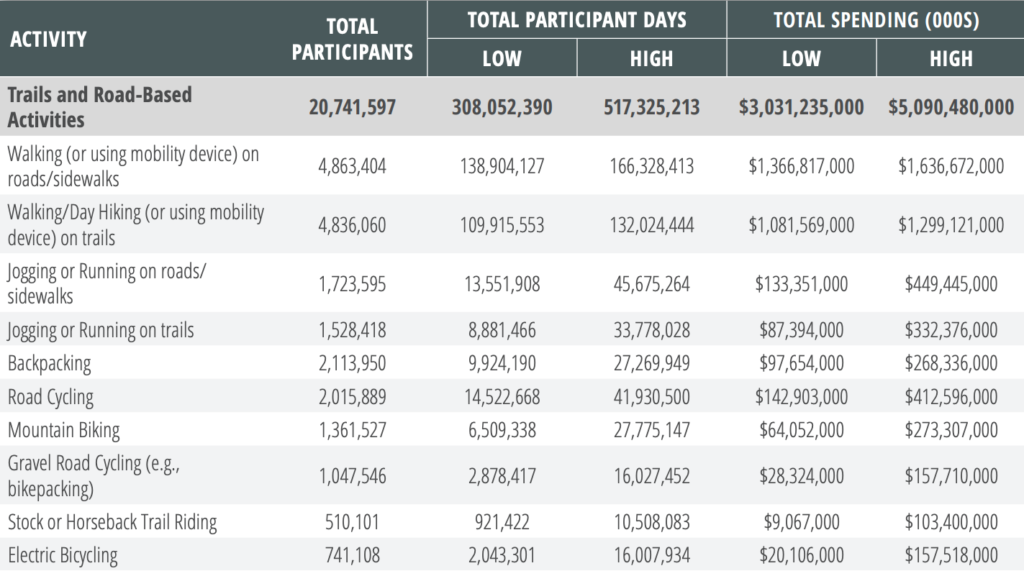
The Economic Analysis of Outdoor Recreation in Washington State, most recently updated in 2025, provides the number of participants, participant days, and economic spending for trails- and road-based activities. The data shows there is a large economic potential in activities related to walking, road cycling, gravel road cycling, and electric bicycling(2).

Trails and Road-Based Activities

 Research has found that the slower speed of bicycle and pedestrian travel contributes more to an economy. Take bicycle travelers, for example. A recent study showed that bicycle travelers spend up to 40% more per trip compared to others traveling the same distance in an automobile(3).

Washington Bikes calls these travelers “wallets on wheels” because their trip-related expenditures account for 96% of the economic impact of bicycling(4).


High ROI

Every $1 spent on developing outdoor recreation generates $1.52 in economic activity (5).


Cycle Tourism Trends5

Cycle tourism — which includes day tours, destination riding, events, and multi-day bicycle travel  — is cycling that allows travelers to discover different cultures, scenic landscapes, and destinations.

The market is growing, thanks to the following:

  • government initiatives to promote tourism,
  • an increasing number of cyclists undertaking long-distance trips
  • rising demand for e-bikes, growing interest in health and wellness,
  • greater adoption of sustainable travel options, 
  • the popularity of experiential and adventure tourism, and
  • investment in cycling infrastructure.

Advanced navigation and trip-planning technologies that enhance connectivity, engagement, and the overall cycling experience can help leverage the growing trend. In addition, partnerships with local businesses, food festivals, and cultural attractions can create more immersive and well-rounded travel experiences, further boosting the appeal of cycle tourism in the years ahead.


Resources

(1) Adventure Cycling – Bicycle Tourism 101: Explains what bicycle tourism is, why it’s important,  who bicycle travelers are, and what makes a bicycle tourism destination


(2) Washington State Recreation and Conservation Office – Economic Analysis of Outdoor Recreation in Washington State: shows economic contributions by outdoor activity


(3) WSDOT – Bike Tourism in Smaller Communities: Explains how bike tourism benefits communities; provides ways to attract bike tourists; offers case studies for communities that have successfully capitalized on bike tourism


(4) Washington Bikes – Bicycle Travel & Tourism Development: provides an overview of bicycle travel and tourism development specific to Washington state


(5) Precedence Research – Cycle Tourism Market Size Share and Trends 2026-2035: provides valuable information about cycle tourism trends


©2026 // Curioocity LLC // Bellingham, WA